


You can reupholster RV furniture yourself when the frame, foam support and any recliner or bed mechanism are still sound. Take the piece out of the RV, photograph it, remove the old cover, use it as a pattern, replace flat foam, then staple or sew the new cover on. Replace the piece instead when the frame is damaged, the mechanism fails or the size no longer fits.
Key takeaways
- Check the frame first. A wood frame with a stapled cover is a reasonable DIY job. Metal frames and sewn, fitted covers take special tools.
- Foam matters as much as fabric. If the seat is flat or soft at the front edge, new fabric alone won't fix it.
- Pick a cover rated for heavy use. Fabric groups publish abrasion ratings in "double rubs" so you can compare.
- Replace instead of recovering when the frame is cracked, the mechanism is broken, or you want a different size or layout.
- If your sofa has seat belts, ask your RV maker before you take it apart or swap it.
Can RV furniture be reupholstered?
Yes, if the structure underneath is sound. Upholstered seating is built in layers: a frame, springs or webbing, padding, and an outer cover. The Montana State Extension Service's classic bulletin Simple Upholstery Methods walks through each layer and says worn coverings, sagging webbing and broken springs can be corrected with a knowledge of simple upholstery methods.
What decides the job is how your piece is built. Do It Yourself RV notes that on a wood frame the fabric is held with staples, which you can pull out with pliers. Metal frames are a different case, and you may need special tools and materials to attach a new cover. Recliners and sofa beds add a mechanism to work around.

Reupholster or replace: how to decide
Start with what is actually wrong:
| What you see | Reupholstering makes sense when... | Replacing makes sense when... |
|---|---|---|
| Peeling, flaking or torn cover | The frame and foam are fine and you can match the shape | Several pieces are failing at once and you'd rather not recover them all |
| Flat or saggy seat | New foam (and maybe new webbing) brings it back | The frame itself is bowing or cracked |
| Recliner or sofa bed won't work | You can get the mechanism repaired first | Parts aren't available or the frame is damaged around it |
| Wrong size or layout | Not really: a new cover keeps the same size | You want recliners, theater seats or a sleeper in a new size |
| Seat belts in the sofa | You leave the belt anchors exactly as they were (ask your RV maker first) | You ask your RV maker how belts work with the new piece before you order |
A senior member on The RV Forum put it plainly when an owner asked whether to recover or replace a jackknife sofa: sometimes it's cheaper to replace than reupholster, and if you do reupholster, make sure the foam padding is replaced with good quality dense foam. Get a written quote for both options before you decide.
Before you start: tools, materials and fabric
Tools
The Montana bulletin lists strong shears, a hammer, a tack puller, upholstery needles (straight and curved) and pliers. The Tacoma Tool Library's chair guide adds a Phillips and a flathead screwdriver, needle nose pliers, a staple gun, scissors and a marker. For sewn covers you also need a sewing machine strong enough for thick fabric.
Materials
Upholstery fabric or vinyl (buy extra for pattern matching), new foam if the old foam is flat or crumbly, upholstery batting, staples for your staple gun, and upholstery thread if you sew.
How to choose a fabric that lasts
RV seats get daily use, so check the abrasion rating. The Association for Contract Textiles uses the Wyzenbeek test, measured in double rubs. Its guideline for woven upholstery is 15,000 double rubs for low traffic, private spaces and 30,000 for high traffic, public spaces. ACT notes that real wear also depends on use, cleaning and design, so treat the number as a guide.
For comparison, Ultrafabrics rates its Ultraleather line at 400,000 double rubs on the Wyzenbeek test. On our own furniture, far more of our customers choose Ultraleather than Premium Fabric.
Whatever you choose, judge the color inside the RV, not on a screen. This fall, Nic, our store manager, offered to mail an owner samples so they could see the colors in the coach itself, and that same month he mailed another customer a set of light Ultraleather samples to compare at home. You can browse the colors and ask about samples on our Upholstery page.
How to choose foam
The Polyurethane Foam Association explains that density (pounds per cubic foot) is linked to how well foam holds up and supports weight. Firmness is a separate measure, called IFD, so a dense foam can still feel soft. When you shop, ask for both numbers instead of just "firm" or "soft."
Firmness is a choice on our own furniture too. When a customer this fall asked for heavy-duty, dense foam so he wouldn't end up feeling the frame, Brayden, our sales associate, explained that our standard seat foam sits in the middle (not soft, not firm) and that denser, firmer options are available. Some of our customers also choose foam density as its own option.
How to reupholster RV furniture, step by step
These steps follow the Tacoma Tool Library guide, the Montana bulletin and the Do It Yourself RV process. Keep the old parts until you're done.
1. Take the piece out of the RV
Find out how the piece is fastened: screws or bolts through the base, brackets at the corners, and any seat belts anchored through the frame. On an RV owners' forum, one owner unbolted just the seat section of a jackknife sofa and took that part to an upholstery shop. If the piece has seat belts, ask your RV maker how they mount before you unbolt anything.
2. Photograph and label everything
Take photos from every side before you pull a single staple, and label each part with masking tape. Those photos are your instructions for putting it back together.
3. Remove the old cover
Turn the piece over and find where the fabric is attached. The Tacoma guide loosens each staple with a flathead screwdriver, then pulls it out with needle nose pliers. Keep the old cover in one piece: it's your pattern.

4. Inspect the frame, springs and foam
With the cover off, check for cracked wood, loose joints, broken springs and stretched webbing. In a jackknife sofa repair thread on an RV owners' forum, one member notes that a bowing frame needs someone with carpentry skills. The owner who started that thread found the soft front edge had only foam under it, and fixed it with wood strips between the seat supports plus new foam. Fix the structure now, before it's hidden again.
5. Replace the foam if it's flat
Lay the seat base on the new foam, trace around it with a marker and cut it. The Tacoma guide uses a serrated bread knife for this. Wrap the foam in batting and staple the batting down, working from the middle of each side out toward the corners.
6. Cut the new cover from your pattern
Lay the old cover on the new fabric and draw a line about 2 inches outside it, as the Tacoma guide does. That margin gives you something to grip. Sewn covers and piping need the sewing machine here.
7. Staple or fit the new cover
Place the cushion face down on the fabric. Staple the middle of each side first, then work outward, leaving the corners for last. Keep the fabric taut as you go, and check often for lumps from uneven pulling. The Do It Yourself RV guide says the fit should be snug but not so tight that the cover rips when someone sits down.
8. Put it back and fasten it down
Reassemble it using your photos and fasten it down the way it was before. On The RV Forum, one member suggests bolting brackets to the floor instead of using only screws. This fall, Brayden described how our team fastens new furniture: bolts go through the holes already drilled in the frame, and where a slide has a metal plate in the way, clamps let the bolt go into a different spot. Either way, put every bolt back and don't skip any. Test any recliner or bed mechanism several times before your next trip.
What can go wrong when you reupholster RV furniture
- New fabric over a weak base. A new cover over worn foam, a bowing frame or broken springs won't last. Fix what's underneath first.
- Lumps and wrinkles. They come from uneven pulling. Staple from the center out.
- Metal frames and fitted covers. These can need sewing skills and special tools and materials. If your piece is built this way, a local upholstery shop (automotive or residential) can be the better call.
- Covering the wrong material. If the old surface was peeling, a similar material can do the same thing later. Choose a cover with a published abrasion rating.
When replacing makes more sense
Reupholstering keeps the same frame, size and mechanism. It's not the answer when:
- You want a different layout, such as swapping a jackknife sofa for theater seats or two recliners.
- The space needs a different size, like a narrower sleeper or a sofa that fits a raised slide.
- The frame or mechanism is damaged.
- Several pieces are failing at once and you want them to match.
That last case came up this fall. An RV owner came to us about a three-sided dinette with all the seats peeling and a sofa peeling too, and asked whether we reupholster or put in new. Brayden explained that what we do is full replacement furniture, and that the first step is measuring the space, including any slides and valances, before we recommend pieces. The owner also wanted the two chairs in the coach replaced so everything would match. Our camper furniture ideas guide walks through what to replace first.
We sell new RV furniture, handmade by Amish artisans, in three upholstery options: Ultraleather, Premium Fabric and Italian Cowhide Leather. Our sofa, recliner, theater seat and sleeper product pages list a solid hard maple wood seat frame with a tempered steel chair back frame. If you replace, we offer free delivery to the lower 48 states or free installation at our Lancaster shop on orders of $1,000 or more; see our shipping page for details. Installation at the shop includes removing and disposing of your old furniture. If you would rather do the swap yourself, our step-by-step guide to replacing RV furniture walks through it. If the old pieces are still in good shape, our team donates them to a ministry that helps families find furniture, and you're welcome to keep them instead.

Do it yourself, hire a shop or replace?
- DIY: dinette cushions, simple seat cushions and wood-framed pieces with stapled covers. These are good first projects.
- Upholstery shop: sewn, fitted covers, metal frames, recliners, sofa beds and belted seats.
- Replace: damaged frames, broken mechanisms, or when you want a new size or a different kind of seating.
Whichever way you go, our guide on how to clean RV upholstery helps the new cover last, and our RV remodel guide shows where furniture fits in a bigger project.
Lines from our before-and-after page
 28″ Lil' Manhattan Wallhugger Recliner
 68″ E-Z Sleeper Jackknife w/ Drawer
 74″ Lux Queen Hide-a-Bed Sofa
 71″ Encore Ultra Sleeper
Frequently asked questions
Can RV furniture be reupholstered?
Yes, if the frame, foam support and any mechanism are in good shape. Wood frames with stapled covers are the easiest to do yourself. Metal frames and sewn, fitted covers take special tools and skills.
How do you reupholster an RV jackknife sofa?
Unbolt it (check for seat belts first) and take the seat and back sections off the jackknife frame. Then follow the same steps: photos, old covers off, new foam, new covers cut from the old ones, staple from the center out. Test the fold-down action before you reinstall it.
How do you reupholster RV dinette cushions?
Dinette cushions are a good first project. Remove the old cover, check the foam, cut new fabric about 2 inches larger than the old cover and staple it to the base board from the middle of each side outward, corners last.
Should I reupholster or replace a peeling RV sofa?
If only the cover is peeling and the frame, foam and any mechanism are sound, a new cover can work. Pick a material with a published abrasion rating so it doesn't peel again. If several pieces are peeling at once, or you want a different size or layout, replacing them together can be simpler and lets everything match.
Is it cheaper to reupholster or replace RV furniture?
It depends on the piece, the fabric and whether the foam and frame need work. A longtime member of The RV Forum points out that replacing is sometimes cheaper, so get written quotes for both.
Sources
- Montana Extension Service: Simple Upholstery Methods, bulletin in the Montana State University Library extension archive, arc.lib.montana.edu (tools, reconditioning worn covers, webbing and springs)
- Tacoma Tool Library: How to Reupholster and Paint a Chair (removing staples, cutting foam, 2-inch pattern margin, stapling order)
- Do It Yourself RV: What's the Process for Reupholstering RV Furniture? (wood vs metal frames, photos, cover fit)
- Association for Contract Textiles: Abrasion guidelines, woven fabrics (PDF)
- Polyurethane Foam Association: Foam Performance (density and firmness)
- Ultrafabrics: Ultraleather collection (abrasion rating)
- The RV Forum: Jack knife sofa, replace or recover?
- RV owners' forum thread: Saggy jackknife sofa repair
- Open Road Interiors: Upholstery, Before and After and Shipping pages
- Product pages on openroadinteriors.com (as listed in November 2026)
How we made this guide: we read the pages that rank for RV reupholstery questions, owner forum threads on recovering versus replacing, the questions RV owners bring to our team, and the upholstery and foam options our customers choose. We took the steps from the Montana Extension bulletin, the Tacoma Tool Library guide and the Do It Yourself RV process, the fabric and foam facts from the Association for Contract Textiles, the Polyurethane Foam Association and Ultrafabrics, and the photos from our own before-and-after page. We left out prices and job times because they vary too much by piece and shop.
Visit us
Come sit on it before you buy
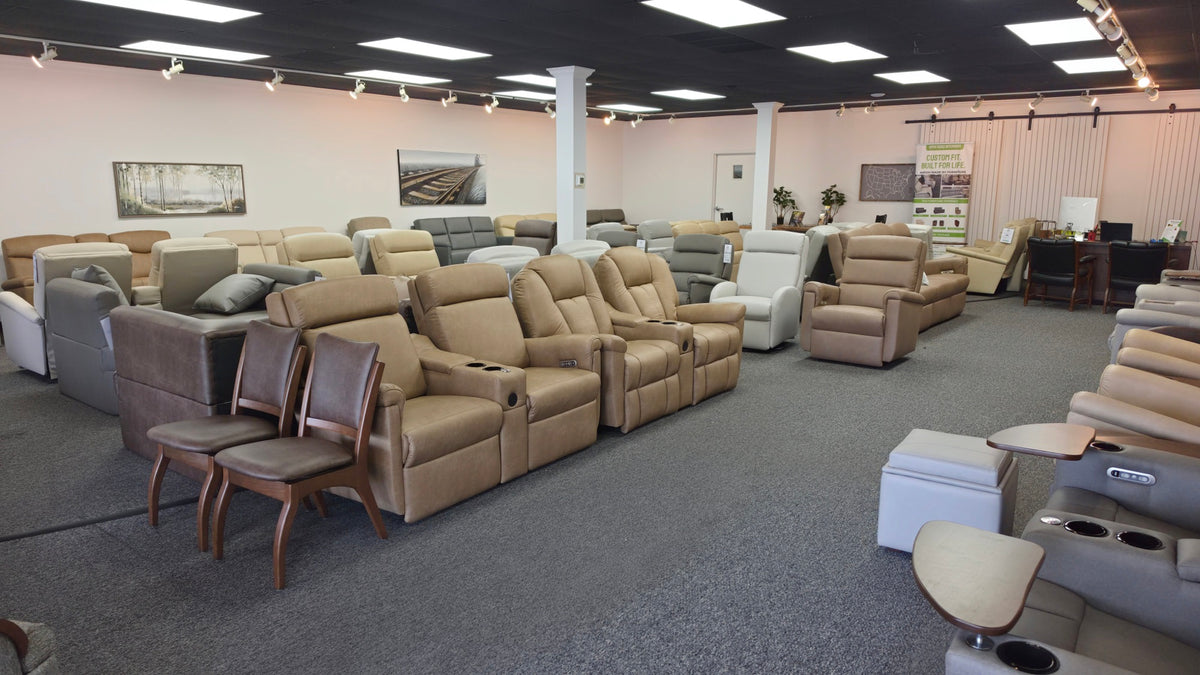
Visit our Lancaster, PA showroom at 2460 Lincoln Highway, Suite 504. Open Monday to Saturday, 10 to 5, no appointment needed.


