
Full-Time RV Living: What to Know Before You Move In
 By Michael King, Owner

Full-time RV living means your RV is your only home. It suits people who love to travel and can live with less space, a moving address and steady upkeep. Before you move in, live in a similar rig for a month or more, budget by category, pick a domicile state, sort out mail, insurance and health care, and make sure the seats and beds work for everyday life.
Key takeaways
- Try it before you sell the house. A month or more in a rig like the one you'd buy teaches you more than any pros and cons list.
- Nobody can hand you a monthly number. Budget by category: campsites, fuel, payments, insurance, health care, repairs, phone and mail.
- You still need a legal home state. Escapees RV Club names Texas, Florida and South Dakota as RV-friendly domicile states.
- Public land isn't a long-term address. The BLM generally limits dispersed camping to 14 days in any 28-day period.
- When you live on your furniture, plan for seats you sit in for hours, a bed guests can sleep on and a place to work.
What is full-time RV living?
Full-time RV living means the RV is your primary home, with no house waiting for you. Some full-timers move every few days; others stay a season at one campground. Retirees who keep a house and winter in the RV are called snowbirds, but this guide applies to them too.
We wrote it for couples weighing the move, including those close to retirement. We'll be honest about the hard parts and spend the most time on what we know best: living on your furniture every day.
Is full-time RV living worth it? The honest pros and cons
It's worth it if the left column matters more to you than the right one.
| Pros | Cons |
|---|---|
| Travel without packing and unpacking | A small space shared all day, every day |
| Visit kids and grandkids on your schedule | Upkeep never stops: roof, seals, tires, slides |
| Fewer things to own and look after | Downsizing is hard, and storage units add a bill |
| Follow mild weather through the year | Mail, voting, taxes and health care take more planning |
| Freedom to change plans | A repair day can mean a hotel night |
Two cons catch new full-timers off guard. One is space: a lumpy sofa bed or a recliner that hits the wall is fine for a weekend, but wears on you every day. The other is upkeep: your house now rolls down the highway, so budget time and money for repairs.
How much does full-time RV living cost?
Escapees RV Club answers with "It depends": on your fixed bills, how much you travel, where you stay and what you do there. So instead of one monthly figure, build your budget from these categories.
| Budget category | What drives the cost |
|---|---|
| Campsites | Nightly vs weekly or monthly rates, resort parks vs public land |
| Fuel | How far and how often you move, rig size, towing |
| Payments | Loans on the RV and a tow vehicle or towed car |
| Insurance and health care | An RV policy for full-time use; a health plan that works away from home |
| Repairs | Tires, roof, slides, appliances, plus a repair fund |
| Phone, internet, mail | Data plans, a mail service, vehicle registration |
| Memberships | Camping clubs and roadside assistance |
Is full-time RV living cheaper than a house?
It can be, or it can cost more. Put your current housing costs (mortgage or rent, property tax, utilities, upkeep) next to the categories above. Moving often pushes fuel and nightly rates up; longer stays bring them down.
A savings tip if you're 62 or older
The National Park Service's Senior Pass, for US citizens or residents 62 or older, covers entrance and standard day-use fees at sites run by six federal agencies, and may give the passholder a discount on some expanded amenity fees such as camping.
Domicile, mail and insurance: the paperwork side
Pick a domicile state
Your domicile is the one state you legally call home: where you register vehicles, hold a driver's license, vote and pay state taxes. Escapees warns that if you don't truly cut ties, your old state can claim you never left, which can mean back taxes. It names Texas, Florida and South Dakota as RV-friendly choices and adds that there's no perfect state: you give up something to get something.
Plan your mail
A USPS temporary change of address forwards mail for a specified period of time, which suits a move, not a home on wheels. A mail-forwarding service, such as the one Escapees runs, gives you an address in your domicile state instead.
Insure the RV as your home
AAA explains that when you live in it, your RV is both vehicle and home, and RV insurance combines parts of auto and homeowners coverage. You can add personal property coverage for belongings like furniture, and travel expense coverage for a hotel and rental car while the RV is being repaired. Tell your agent you live in it full time.
Health care on the road
Medicare.gov notes that with Original Medicare you can go to any doctor or hospital that takes Medicare, anywhere in the US. Medicare Advantage plans have service areas, and moving out of yours opens a special enrollment period to switch.
Where can you legally live in an RV?
There isn't one national rule. Campgrounds set their own stay limits, and cities and counties set rules for living in an RV on private land, so check locally. On federal public land, the Bureau of Land Management says dispersed camping is generally limited to 14 days within any 28-day period, and that it's for short-term recreation, not long-term living, with designated Long-Term Visitor Areas as the rare exception.
What is the 3-3-3 rule?
A travel rule of thumb: drive no more than 300 miles, arrive by 3 p.m. and stay at least three nights. RVshare describes it as a way to keep trips from feeling hurried.
Choosing an RV you can live in
There's no single best RV for full-time living, only the best one for the two of you. Motorhomes let you walk from the driver's seat to the couch; fifth wheels and travel trailers leave you a truck for errands. Either way, you live with the floor plan, so walk through it and act out a normal day:
- Can you both recline at once without hitting a wall or each other?
- Where does one of you read or work while the other naps?
- Where do guests sleep, and how long does that bed take to set up?
- With the slides in, can you still reach the bathroom, the fridge and the bed?
Don't assume the furniture that came with the rig fits how you live. This November a customer told us the sofa in his motorhome opened into a double bed they never used, while what he missed every evening was a seat that reclines. His wife wasn't sold: the sofa was in perfect shape, and a footstool would do. He had measured the wall at 57 inches, and Brayden, our sales associate, suggested a 55″ narrow-arm Zerowall loveseat, which leaves about an inch on each side. Trading a bed nobody sleeps on for seats you use every day is worth talking over.

Living on the furniture every day
On a weekend trip, the sofa gets an hour after dinner. When the RV is home, the same seats can hold you for eight hours or more: morning coffee, the laptop, a nap, the evening news. Our full guide to furniture for full-time RV living goes deep on seating, upholstery, moisture, power, storage and install day. Here's the short version.
Seating you sit in for hours
Size the seat to each person and sit in it fully reclined for a while. A couple this fall told us the wife had badly sprained an ankle and can't have it hanging off the end of a footrest. They had sat in recliner after recliner where it did, and they found the footrest on our Encore zero wall seat long enough for her. You only learn that by sitting in the seat. Browse our single recliners by width, and look at lift recliners such as the 29″ Lux Electric Lifter if getting up is getting harder.
A place to work
If either of you works or pays the bills from the road, plan a surface. Our RV office ideas walk through more work setups. A computer side table is standard on our Encore zero wall seats and the 71″ Encore Ultra Sleeper. Brayden explains that the swiveling side tables on the arms give each seat a place to eat or use a computer, and pop out for storage when you don't need them.

Sleeping for guests
Kids and grandkids will visit. In November, a retired customer told us the sofa bed in his RV had a lump in the middle, so you slept half on a mattress and half on a cushion. He wanted a bed first and a couch second. Nic Ceresa, our store manager, explained that our Ultra Sleeper opens to a flat sleeping surface and can be notched to sit level on a raised slide floor of up to four inches. For that, we need the depth and height of the slide floor and how far the bed can reach into the room. The 71″ Encore Ultra Sleeper is the sleeper our customers choose most. See every sofa sleeper we carry.

Comfort in a small space
Wallhugger and zero wall recliners need little or no space behind them, which leaves more aisle. Cooking, showers and two people add moisture, so keep humidity in check; our full-time furniture guide has the EPA's tips. Our pieces are handmade by Amish artisans and designed for RVs, and our team secures them to the floor when we install them. We offer free delivery to the lower 48 states or free installation at our Lancaster shop on orders of $1,000 or more.
How to prepare for full-time RV living
- Test it. Live in an RV like the one you'd buy for a month or more, ideally in the season you'd travel.
- Downsize in rounds, then decide whether a storage unit is worth the bill.
- Set your domicile and mail first, while you still have a fixed address.
- Sort insurance and health care for life on the road.
- Start a repair fund and a maintenance schedule.
- Fix daily annoyances before you move in. Measure floors, slides and the doorway, and use our list of what to ask before you buy RV furniture.
Pieces for living on the road
 71″ Encore Ultra Sleeper
 55″ Encore Zerowall Loveseat (Narrow Arm)
 29″ Lux Electric Lifter Recliner
 73″ Encore Zerowall Workmate
Frequently asked questions
Is full-time RV living worth it?
For people who love to travel and can share a small space, it can be. Try a similar RV for a month or more first.
Is full-time RV living cheaper than owning a house?
Sometimes. Compare your housing costs with the budget categories above. Moving often raises costs; longer stays lower them.
What are the best states for full-time RV living?
For domicile, Escapees RV Club names Texas, Florida and South Dakota as RV-friendly states. Each trades off taxes, insurance and vehicle rules differently.
Can you live in an RV on public land?
Not long term. The BLM generally limits dispersed camping to 14 days within any 28-day period, except in designated Long-Term Visitor Areas.
Sources
- Escapees RV Club, The Definitive Guide to Full-Time RV Living.
- Escapees RV Club, Ultimate Guide for Residency and Domicile as a Full Time RVer.
- Bureau of Land Management, Camping on Public Lands.
- National Park Service, Interagency Senior Annual and Senior Lifetime Passes.
- AAA, Insurance Coverage for Full-Time RV Living.
- Medicare.gov, How does Medicare work? and Special Enrollment Periods.
- USPS, Mail Forwarding Options.
- RVshare, The 3-3-3 Rule for RVing.
- Open Road Interiors: Lancaster showroom and Shipping pages; our showroom team's experience with customers (2026).
- Product pages on openroadinteriors.com (as listed in November 2026).
How we made this guide: we read the guides that rank for full-time RV living and checked the paperwork facts with the sources above. Costs appear by category only. The furniture advice comes from our product pages and our team's work with RV owners getting ready to live on the road.
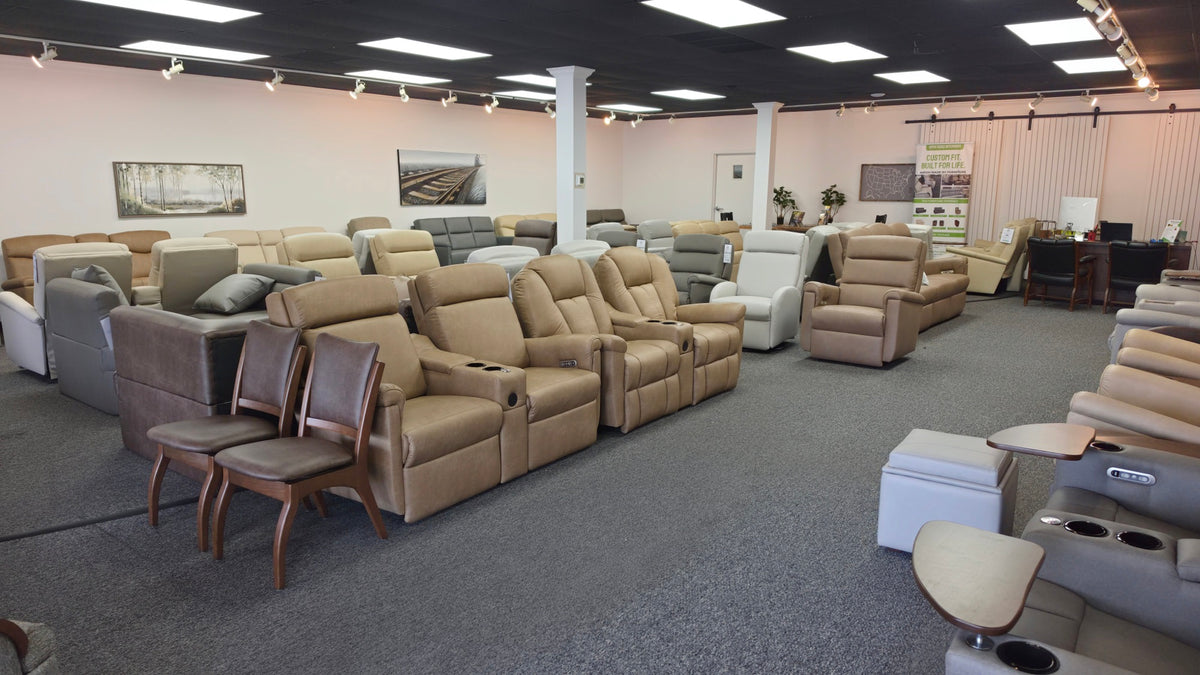
Visit us
Come sit on it before you buy
Visit our Lancaster, PA showroom at 2460 Lincoln Highway, Suite 504. Open Monday to Saturday, 10 to 5, no appointment needed.


